
 English
 中文简体
中文简体

A Hose Built for the Job Site
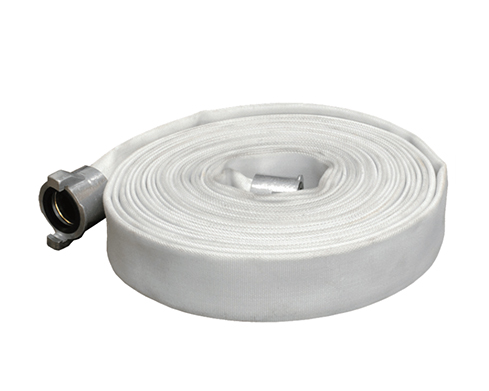
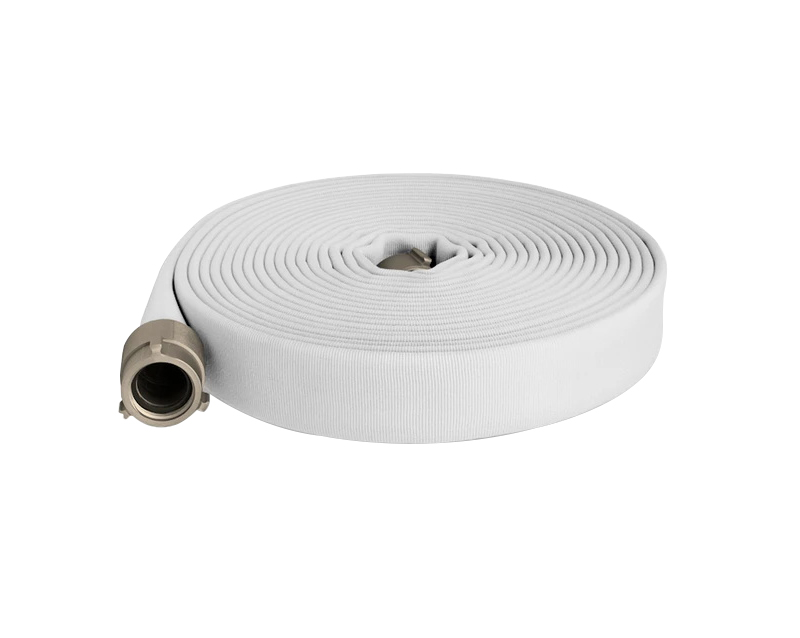
Not every hose ends its day looking the way it started. Dragged across gravel, coiled around machinery, exposed to sun and grit — a hose on a busy worksite takes a beating that a backyard garden hose never sees. That's the gap a rubber covered hose is meant to fill, offering a protective outer layer designed to shrug off the friction and impact that come with daily industrial use.
Unlike hoses with a bare or lightly coated exterior, a rubber covered hose adds a dedicated rubber layer around the core structure. This layer acts as a buffer between whatever the hose brushes against and the internal components doing the actual work of carrying air, water, or fluid. Over time, that buffer is often the difference between a hose that keeps performing and one that starts leaking at the sign of surface damage.
What the Rubber Layer Actually Protects
The core of hoses — the reinforcement braiding and inner tube — isn't built to handle direct contact with rough surfaces. Concrete, metal edges, and repeated dragging can wear through a thin or unprotected exterior faster than people expect, exposing the layers underneath. A rubber covered hose puts a resilient barrier in front of that damage, absorbing scrapes and impacts before they reach anything structural.
This becomes especially noticeable in settings where the hose gets pulled, coiled, and uncoiled multiple times a day. Repetitive motion creates friction points, particularly where a hose bends around a corner or drags over a threshold. A rubber covered hose tends to hold its surface integrity through that kind of repeated handling better than hoses relying on a single thin outer skin.
Where This Hose Type Shows Up
Workshops, construction sites, and manufacturing floors are common places to find a rubber covered hose in daily rotation. Pneumatic tools, pressure washing setups, and general air or water transfer lines all benefit from a covering that can handle being stepped on, run over by light equipment, or dragged across uneven flooring without immediately showing damage.
A few practical traits tend to come up when people compare hose options for this kind of environment:
- The outer surface resists abrasion better than uncoated alternatives
- Flexibility stays consistent even after repeated coiling and bending
- The hose holds its shape rather than developing flat spots under sustained pressure
Agricultural settings also make regular use of rubber covered hose products, since barns, fields, and equipment yards present many of the same hazards as an industrial floor — sharp debris, uneven ground, and constant movement between locations.
Flexibility Without Sacrificing Toughness
One common assumption is that adding a protective layer makes a hose stiffer or harder to maneuver. In practice, a well-built rubber covered hose is designed to stay flexible enough for everyday handling while still offering that extra layer of resistance. Rigidity and durability aren't the same thing, and a hose that's too stiff to coil easily creates its own set of handling problems.
The rubber compound used in the cover plays a role here, since different formulations balance flexibility and toughness differently. Buyers sourcing a rubber covered hose for a specific application often ask about bend radius and coil behavior alongside surface durability, since a hose that resists wear but fights the user at every turn isn't actually saving anyone time.
 +86-576-83015055 / 13761638108
 Hutang Industrial Park, Taizhou City, Zhejiang,China.