
 English
 中文简体
中文简体

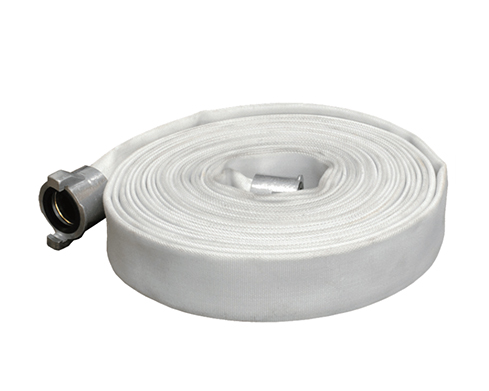
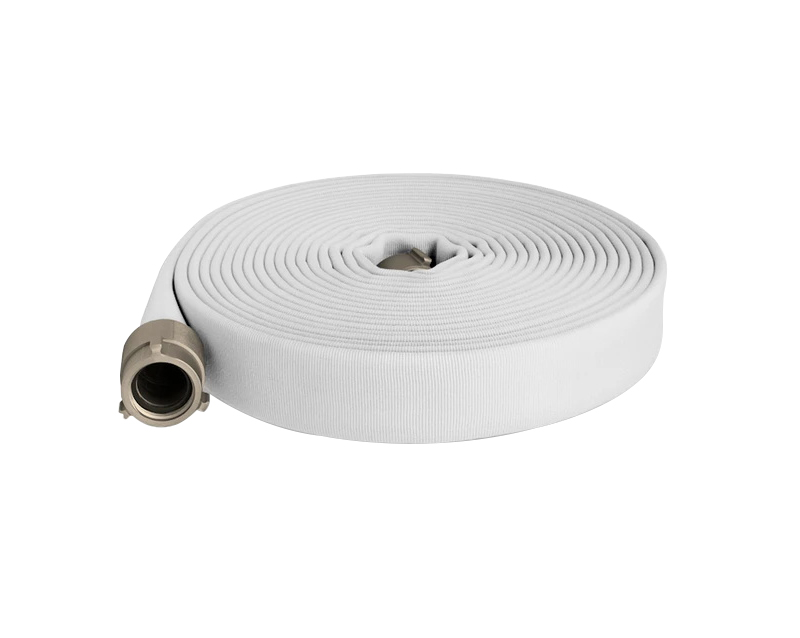
Firefighting equipment depends on components that can move water quickly from a supply point to an operating area. Among these components, Rubber Firefighting Hose has a distinct role because its construction combines flexibility, pressure resistance, and controlled water flow. Unlike rigid pipes, a hose can be rolled, transported, positioned, and connected across changing working areas.
Rubber Forms The Main Flexible Structure
Rubber is widely used in hose construction because it can bend without behaving like a rigid pipe. This flexibility makes it easier to position a Rubber Firefighting Hose around equipment, corners, vehicles, or uneven ground.
The inner rubber layer forms the passage for water. Its surface is designed to create a continuous flow channel, while the surrounding reinforcement layer provides additional structural support.
The outer rubber or polymer layer protects the internal structure from contact with the surrounding working environment. Depending on the product design, different rubber compounds can be selected to create different levels of flexibility and resistance.
Reinforcement Controls Hose Strength
A firefighting hose needs to handle internal water pressure without excessive expansion. This is where reinforcement becomes important.
Manufacturers commonly use woven textile reinforcement, synthetic fibers, or other structural materials between the inner and outer layers. The reinforcement pattern influences how the hose responds when pressure rises.
A tightly controlled weaving process can help maintain consistent hose dimensions. The reinforcement also allows the hose to remain flexible enough for handling instead of becoming a rigid tube.
For Rubber Firefighting Hose, the relationship between rubber flexibility and reinforcement strength is therefore an important part of the product design.
Diameter Influences Water Flow
Hose diameter has a direct connection to water delivery. A larger internal diameter can provide a larger flow passage, while a smaller diameter creates a more compact hose format.
Manufacturers therefore produce hoses in different diameters according to equipment configurations and water delivery requirements. The internal diameter, wall thickness, reinforcement structure, and coupling design need to be considered together.
Length also affects practical deployment. A longer hose can reach a greater distance from the water source, but it also changes handling characteristics and storage requirements.
Couplings Create The Connection Point
A hose itself is only one part of a water delivery system. Couplings connect the hose to pumps, hydrants, nozzles, manifolds, or other equipment.
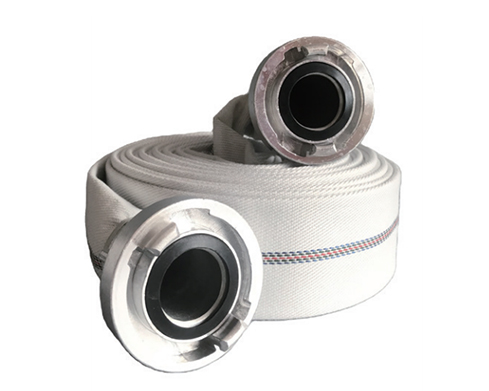
The connection area needs to match the hose diameter and coupling structure. During manufacturing, the hose end may be prepared for mechanical attachment using clamps, sleeves, or other connection components.
A properly designed connection creates a continuous route between the hose interior and the connected equipment. This makes coupling design an important part of Rubber Firefighting Hose production.
Manufacturing Uses Multiple Production Stages
The production of rubber firefighting hose generally involves several coordinated stages. Rubber compounds are prepared according to the intended hose construction. The inner layer is then formed, followed by the application of reinforcement materials.
The outer layer is added around the reinforcement structure. The assembled hose then undergoes controlled curing, which gives the rubber its required physical structure.
Dimensional control is important throughout production. Internal diameter, wall thickness, reinforcement position, and surface condition all influence the finished hose.
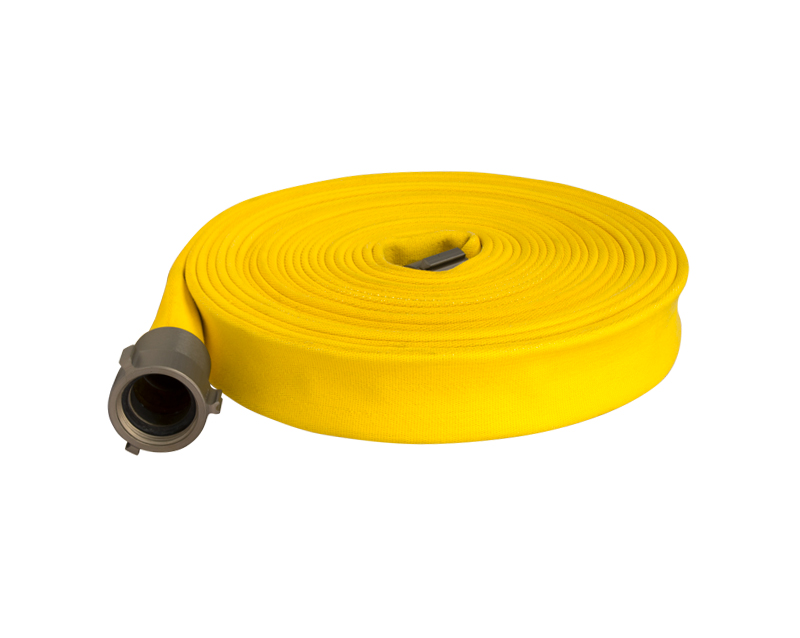
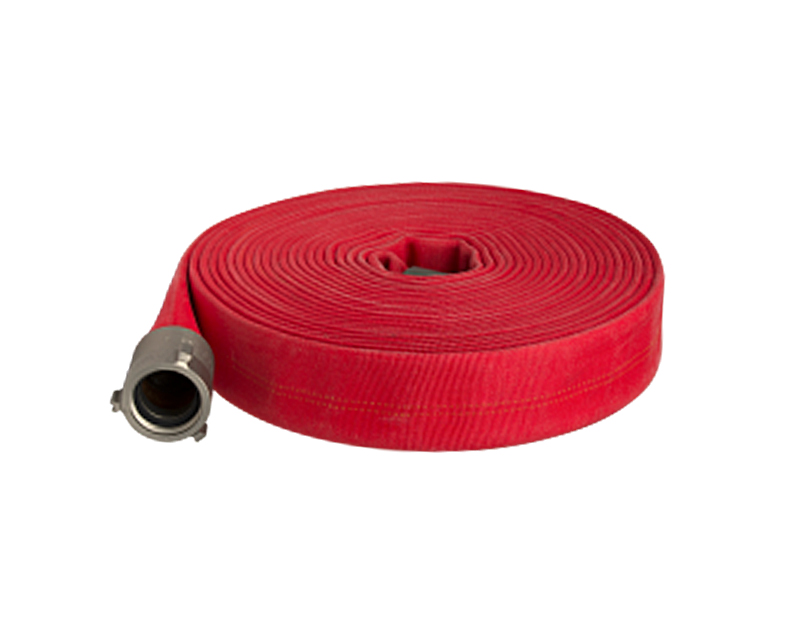
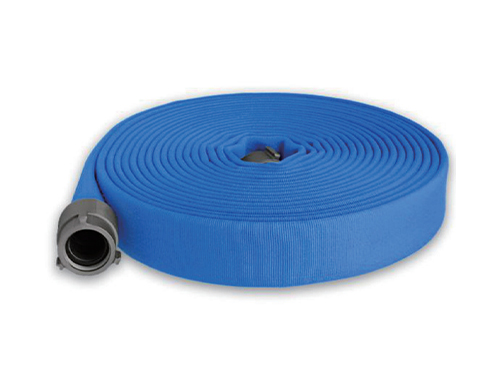
Manufacturers may also produce different surface textures or colors according to product design requirements. These details can help distinguish hose types during equipment organization.
Flexible Construction Supports Different Applications
The flexible nature of Rubber Firefighting Hose allows it to be used across different water delivery arrangements. Fire engines, fixed water systems, industrial facilities, warehouses, and other working areas may require hose products in different sizes and configurations.
The surrounding application can influence the selection of diameter, length, coupling style, and construction. A hose used around compact equipment may require a different handling profile from one designed for larger water delivery systems.
 +86-576-83015055 / 13761638108
 Hutang Industrial Park, Taizhou City, Zhejiang,China.