
 English
 中文简体
中文简体

Fire hoses may look simple at a glance, but their construction involves several carefully selected materials and production steps. A Rubber Covered Fire Hose combines a flexible textile structure with a rubber outer layer, creating a hose designed for demanding water delivery tasks. Its layered construction gives manufacturers room to balance flexibility, pressure handling, surface protection, and ease of handling.
Understanding the Basic Structure
A typical Rubber Covered Fire Hose contains several functional layers. The inner tube provides a passage for water, while the textile reinforcement helps the hose maintain its shape under pressure. The outer rubber covering protects the underlying structure from contact with surfaces and everyday handling conditions.
Each layer has a specific role. The inner section needs to maintain a suitable water passage, the reinforcement needs to provide structural support, and the outer layer needs to create a durable surface. Together, these components form a flexible hose assembly that can be connected to firefighting equipment.
The exact structure can vary according to the intended application, hose diameter, working pressure, and connection requirements.
Why Rubber Is Used
Rubber is an interesting material for hose construction because it can combine flexibility with resistance to repeated bending. During operation, a hose may be rolled, unfolded, moved across different surfaces, and positioned around equipment.
The rubber covering creates a protective exterior around the reinforcement. Its surface can also provide a practical grip when personnel need to move or position the hose.
Different rubber compounds can provide different levels of flexibility, hardness, and resistance to external conditions. Manufacturers select the formulation according to the requirements of the finished hose.
Reinforcement Supports Pressure Handling
The reinforcement layer is one of the key structural parts of a Rubber Covered Fire Hose. Textile yarns are arranged in a woven or braided structure around the inner tube. This reinforcement helps the hose handle internal water pressure without losing its intended shape.
Material selection and weaving structure influence the finished product. Polyester and other synthetic fibers are commonly considered for reinforcement because they provide useful strength while keeping the hose relatively flexible.
The number of layers and reinforcement structure can also vary between hose designs. Larger-diameter hoses and applications with different pressure requirements may require different construction approaches.
Surface Design Has a Practical Role
The outer surface of a Rubber Covered Fire Hose can have different textures depending on the production method. A smooth surface may make the hose easier to slide across certain surfaces, while a textured finish can provide additional grip during handling.
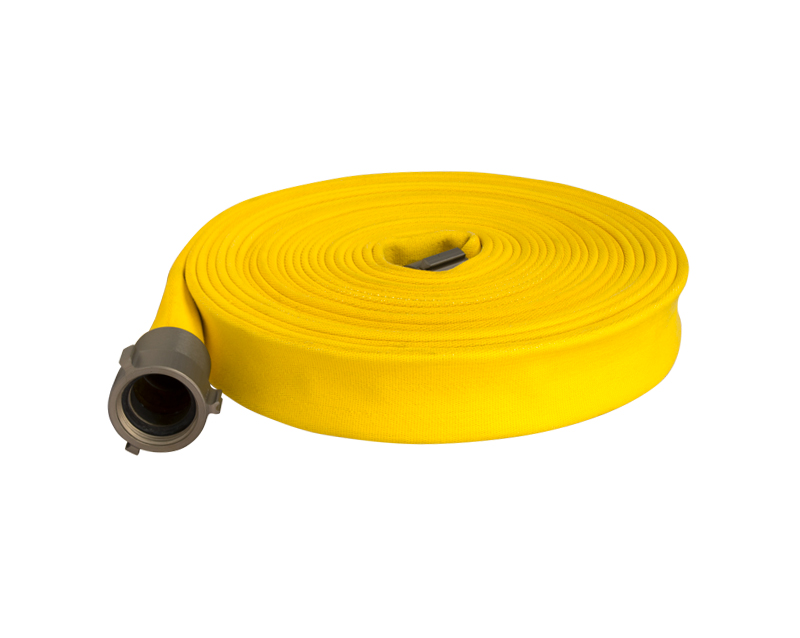
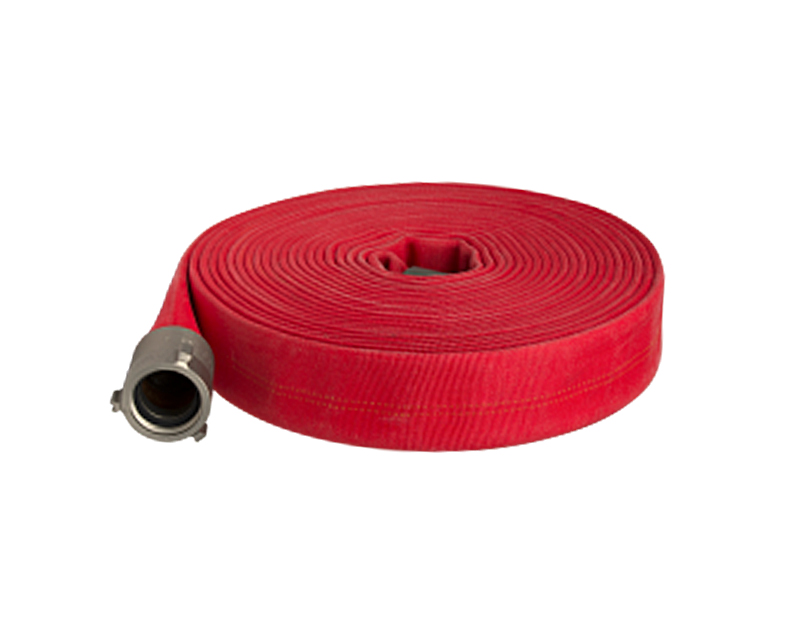
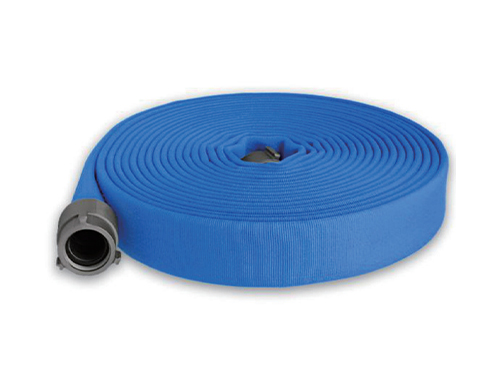
Color can also be incorporated into the rubber compound. Red is commonly associated with firefighting equipment, but other colors may be selected for identification or product organization.
Markings can be printed or embossed onto the outer layer to provide information such as hose size, manufacturer details, or product specifications.
Choosing the Right Hose Structure
When selecting a Rubber Covered Fire Hose, buyers generally consider diameter, length, reinforcement structure, rubber compound, coupling type, and intended application. These details affect how the hose fits into a particular firefighting setup.
For manufacturers and distributors, understanding the construction behind the product can make product selection easier. It also helps buyers communicate specific requirements when ordering customized hose assemblies.
From the inner tube to the textile reinforcement and outer rubber layer, every part contributes to the finished product. The result is a flexible water-delivery hose designed around practical firefighting requirements and varied working environments.
 +86-576-83015055 / 13761638108
 Hutang Industrial Park, Taizhou City, Zhejiang,China.